

RISKY BUSINESS
Middle East Crisis Puts Pressure on Already Stressed Farm Enterprises

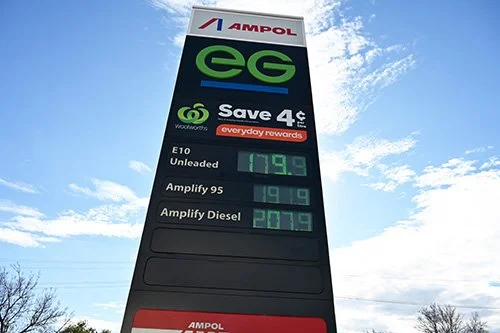
Ongoing instability in the Middle East and disruption through the Strait of Hormuz has created major challenges for Australian grain growers, driving up diesel and fertiliser prices at a critical time for winter crop sowing.
While motorists complained loud and long about the cost of fuel, the situation for farmers has been more than an inconvenience. At a time when diesel was vitally important for sowing the season’s grain crops, prices skyrocketed, while fertiliser supplies became critically short and prices soared accordingly.
The FarmLink Diesel and Fertiliser Survey received responses from over 50 Southern NSW farmers and paints a concerning picture of the impact of this crisis on local farming enterprises.
As of April 2026:
less than 10% of growers had received delivery of their Urea fertiliser requirements for the season
less than 35% had their Urea requirements confirmed and contracted for delivery.
74% of growers estimated that their input costs would increase by over 20% compared to 2025, with 18% estimating the increase to be over 40%.
The situation was placing “significant pressure” on almost 60% of businesses, with a further 19% rating the impact as “threatening viability”.
Given the timing, the immediate impact of the crisis was most clearly felt in decision making around crop types and areas sown for the 2026 season. A small number of farmers decided not to sow any crop at all, while most farmers changed their sowing plans to some degree, reducing the area of crop planted and/or switching from high nitrogen demand crops (e.g. canola) to crops with lower nitrogen demand, or nitrogen fixing legumes. Some growers also planned to reduce the amount of nitrogen applied to their crops if supplies did not improve as the season progressed.
Farming is an inherently risky pursuit, requiring a huge financial investment with no guarantee of the size of the return from that investment at the end of the growing season. Events like the recent diesel and fertiliser crisis increase that risk. Making decisions about how much and which crops to sow, and the best fertiliser investment strategy to maximise potential profit while minimising potential losses is difficult enough under normal circumstances. The additional pressure on those decisions this season has been significant.
Seasons like 2026 highlight why understanding and managing production risk is becoming increasingly important for grain businesses. Funded by GRDC, RiskWi$e is a national program which seeks to understand and improve the risk-reward outcomes for Australian grain growers by supporting grower on-farm decision-making. One of the key focus areas of RiskWi$e is nitrogen decision making.
FarmLink has two Nitrogen trial sites under this program, one at TAIC and another at Harden. A field walk and workshop on Nitrogen decision making will be held in July this year. Keep an eye on our socials for more info.
Mark Skewes
Principal Research & Extension Manager