Member Spotlight - Robert Taylor
Enterprise diversity builds resilience at ‘Glenalla’

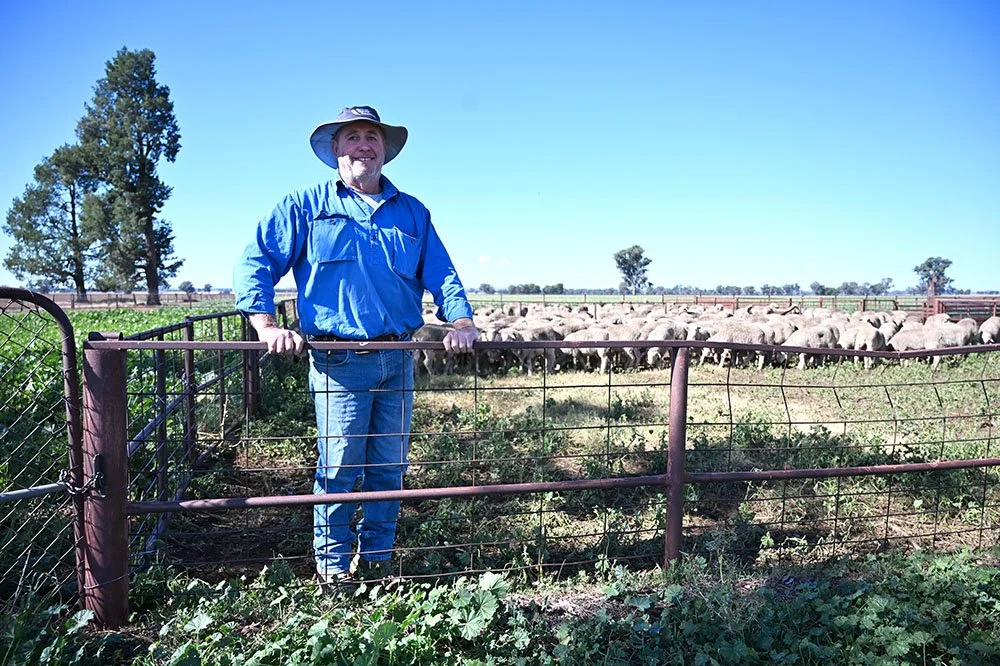
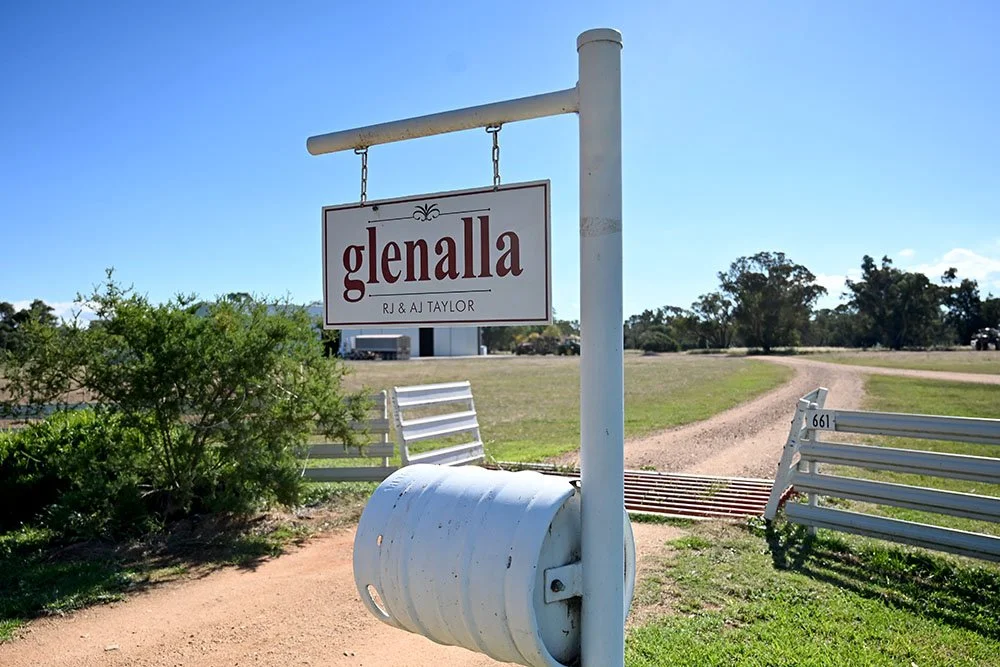
Robert Taylor - ‘Glenalla’
FARM SNAPSHOT
Owners: Rob, Mandy, Fletcher and Bob Taylor
Location: Greenethorpe, New South Wales
Farm area: 2631 hectares
Area cropped: 1600 ha
Annual rainfall (mean): 620 mm
Topography: undulating
Soil types: sandy clay loams to red kandosols
Soil pHCa: 4.4 to 6.0
Typical crop sequence: canola/wheat, with barley, lupins and vetch added depending on season
Enterprises: cropping, prime lambs, wool, hay
A diverse enterprise mix, coupled with a keen focus on flexibility and measurement, is helping a mixed farming family deal with seasonal variability and rising input costs.
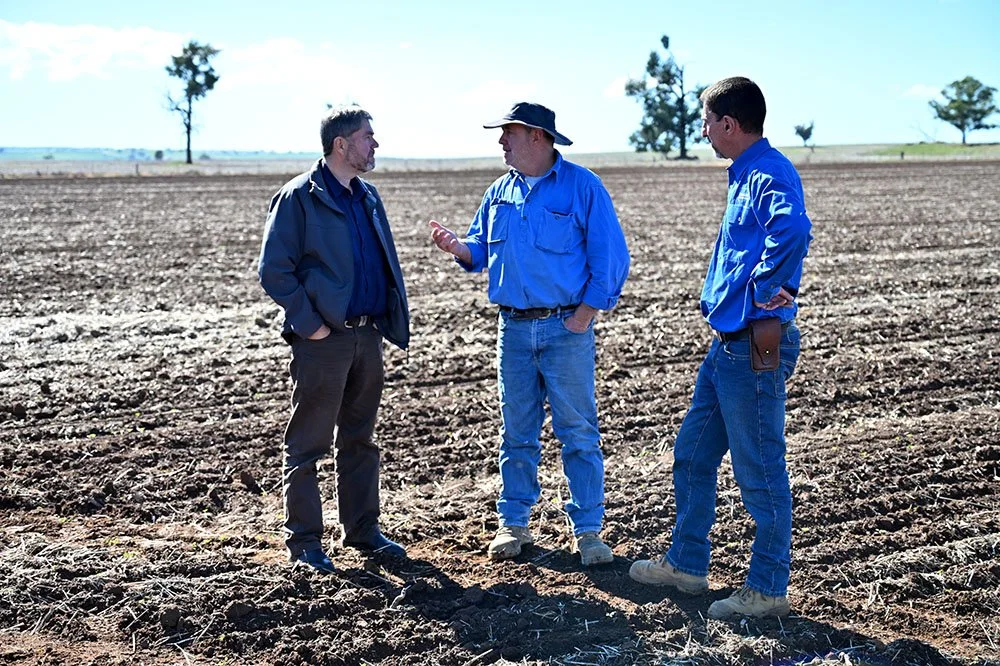
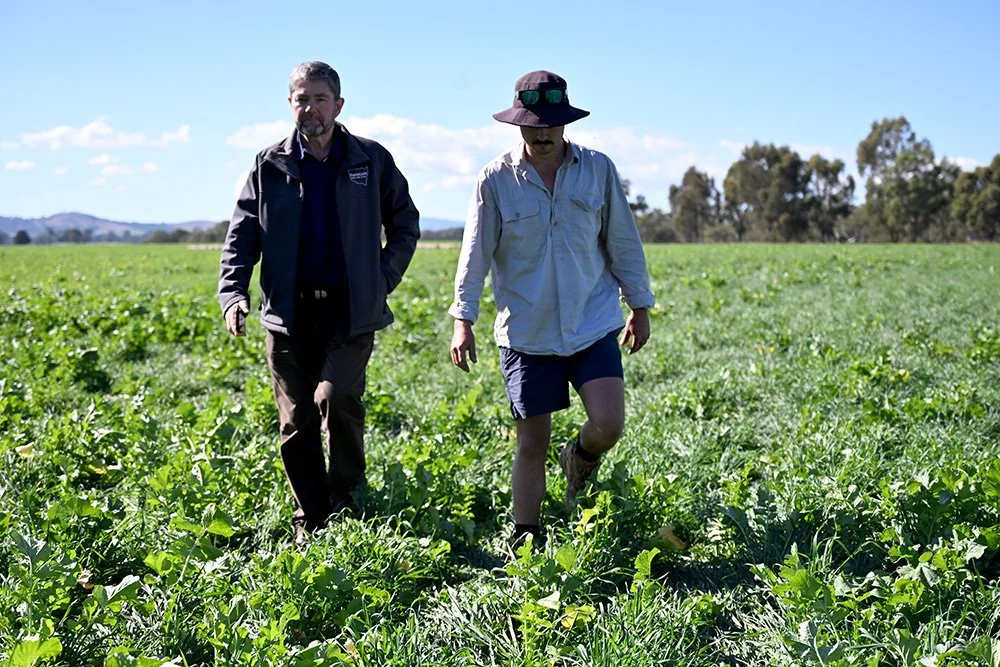
Rob Taylor has developed a diverse business at ‘Glenalla’ to enhance the resilience of his family’s mixed farm near Greenethorpe, New South Wales.
Working with his wife, Mandy, son Fletcher, father Bob and employee Rob Wells, the 61-year-old says the family’s cropping, sheep and hay business is built on flexibility.
That flexibility was important in the dry years of 2018 and 2019, followed by wetter-than-average conditions from 2020 to 2022.
“We try to make the most of rain when and where it falls,” Rob says. “Effective fallow weed control is critical to maximise moisture infiltration.”
Earlier this year, Rob’s crop-to-pasture ratio shifted from 60:40 to 50:50 across his 2631-hectare farm.
Strong prices for wool, lamb and mutton encouraged him to increase the focus on livestock. This has resulted in more land under pasture.
On the cropping side, he is growing more barley, lupins and vetch this year, as part of a rotation that is predominantly wheat/canola.
Rob says the change reduces the nitrogen demand, supports sheep production and gives the business more options: “We can swing from stock to crop quickly.”
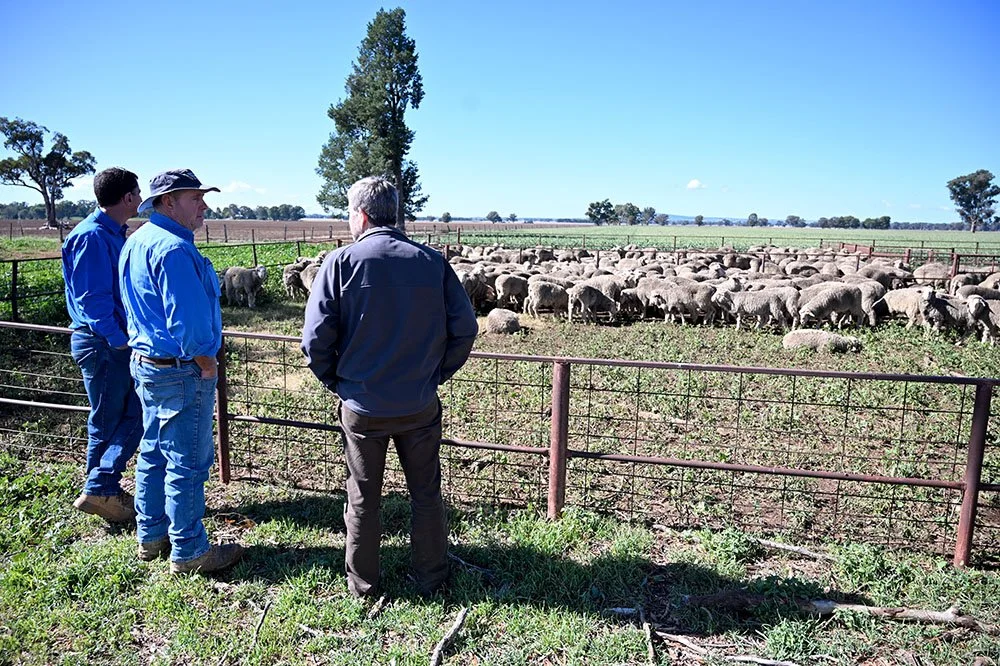
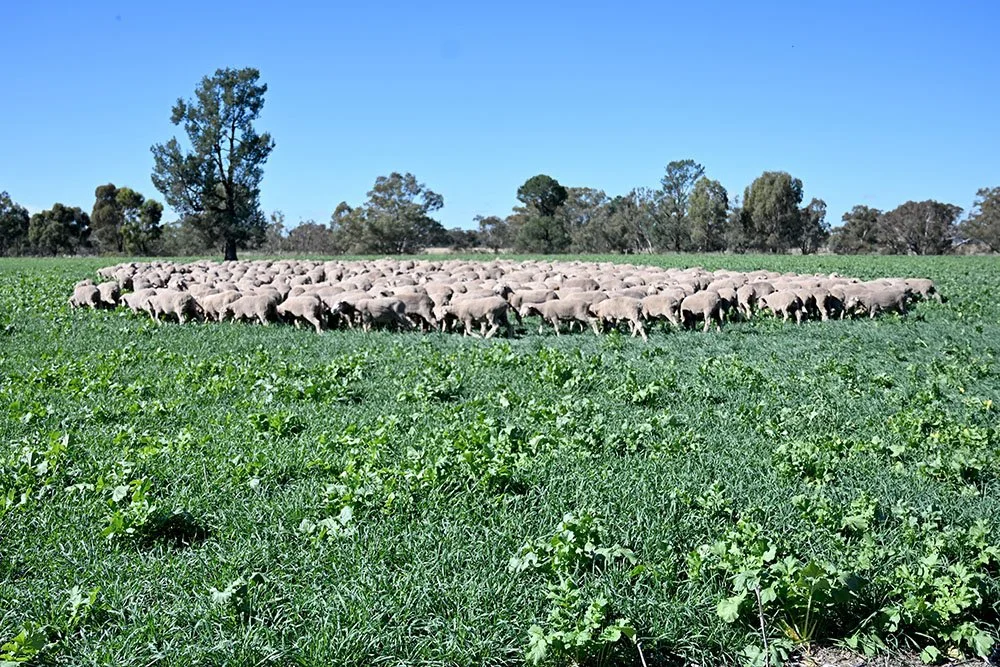
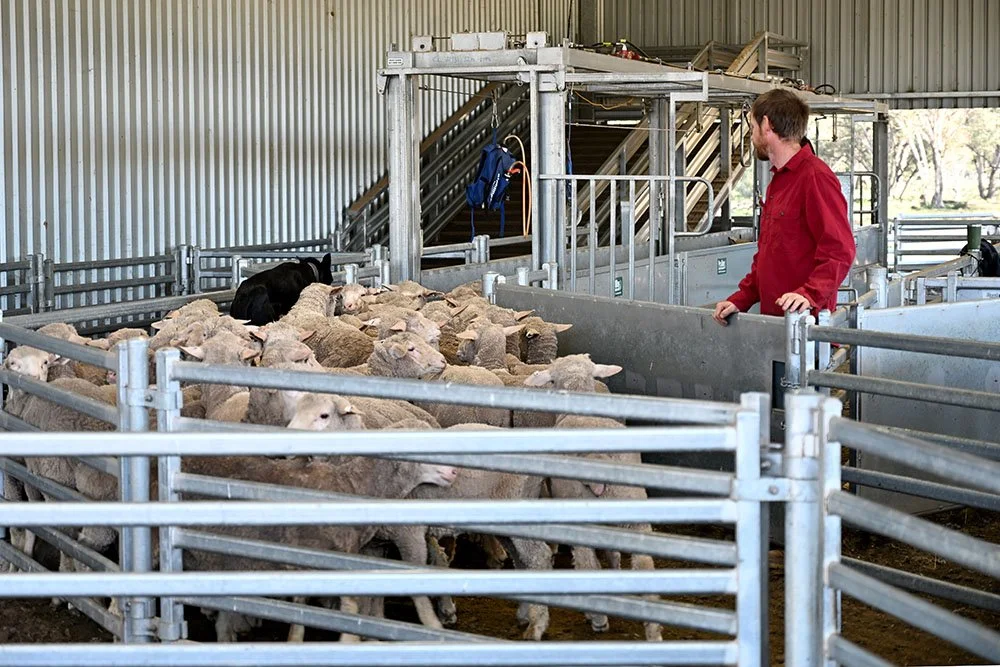
The Taylors run about 3,500 Merino ewes joined to Merino rams and 1,000 ewes joined to terminal sires, adjusting numbers to suit the season.
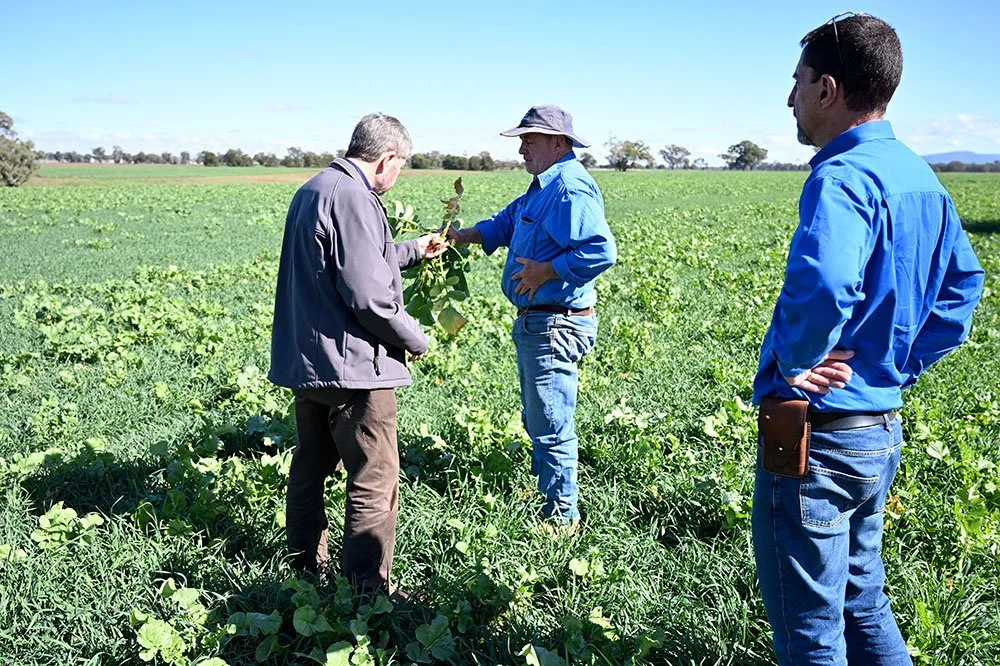
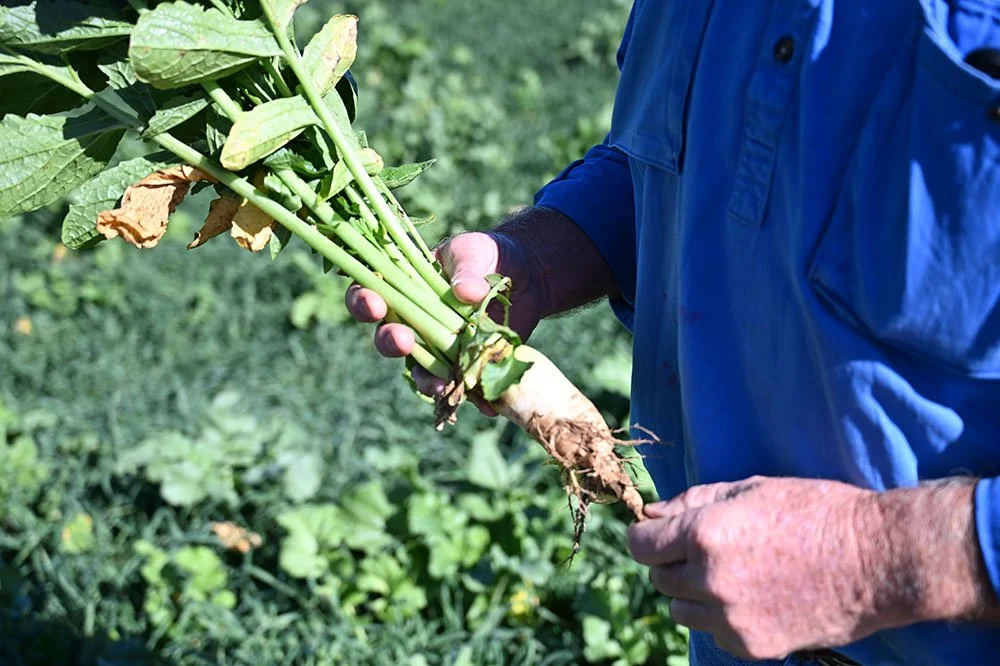
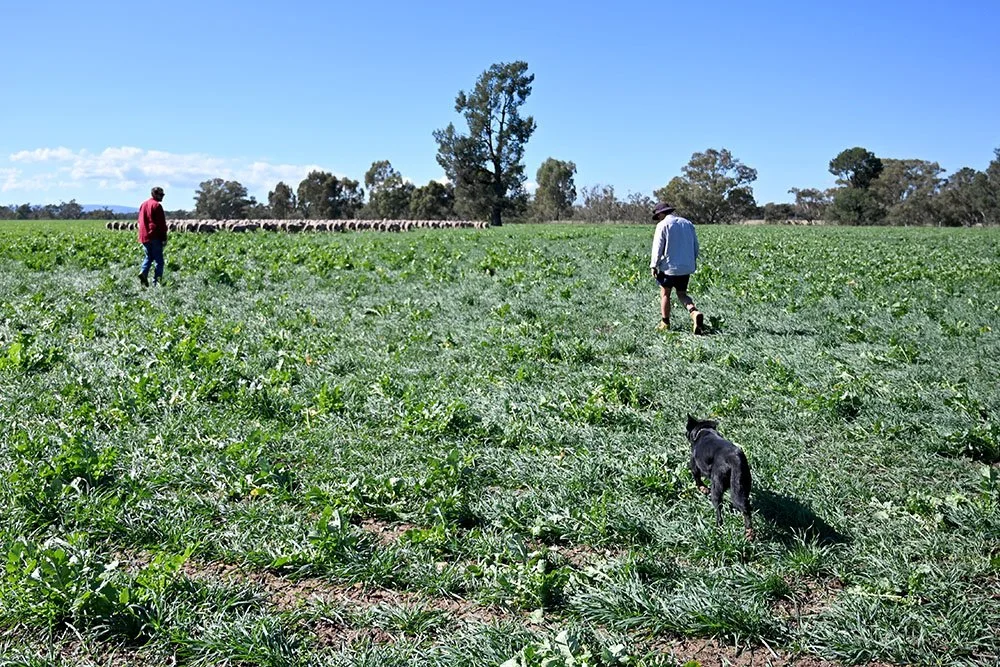
Dual-purpose cereals and canola fill the winter feed gap and finish lambs when pasture supplies are tight.
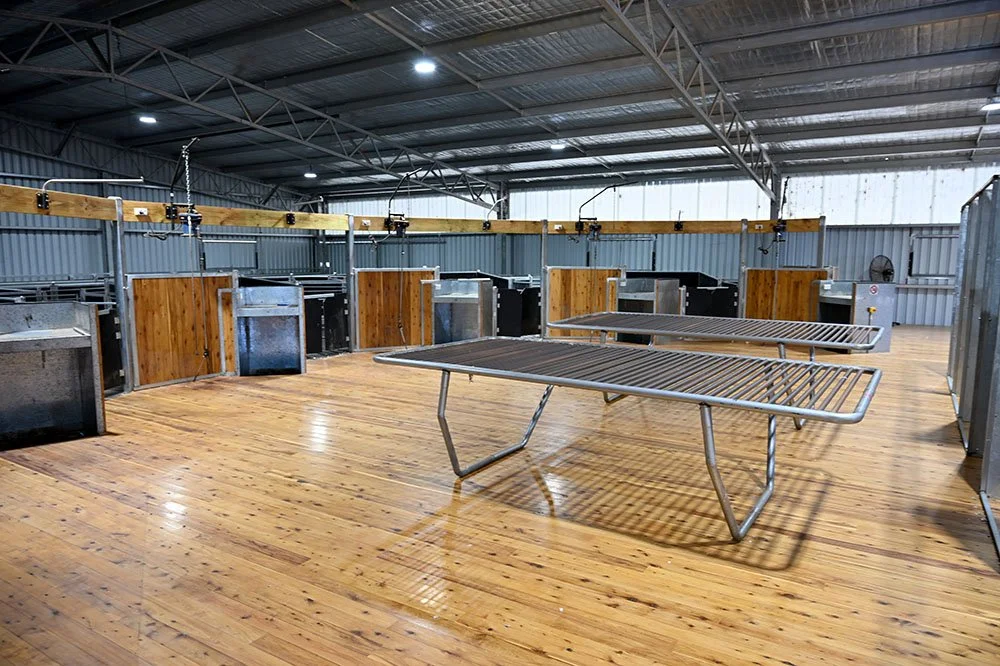
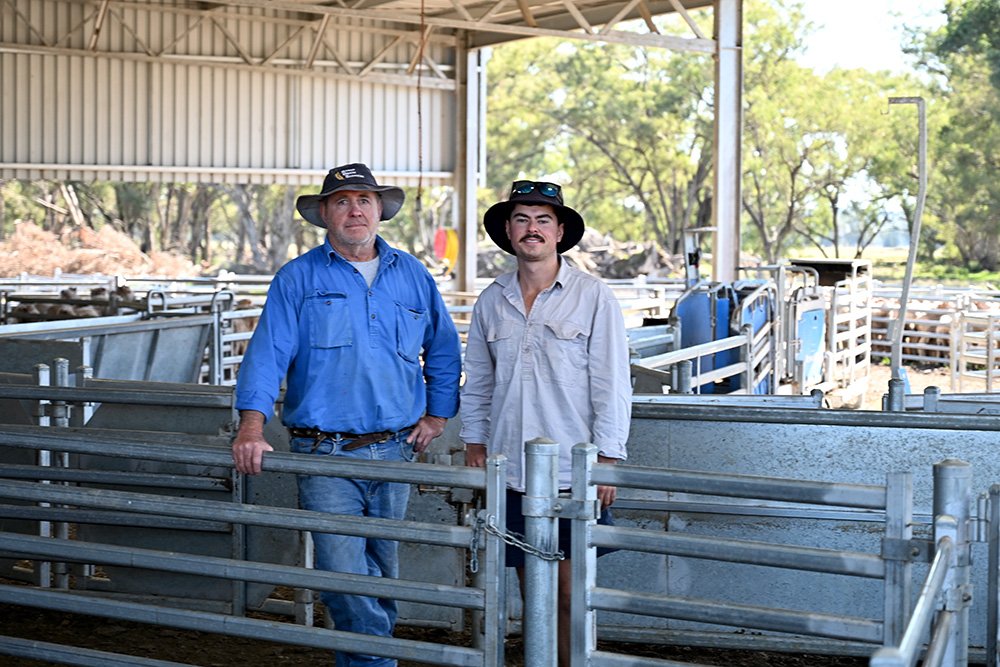
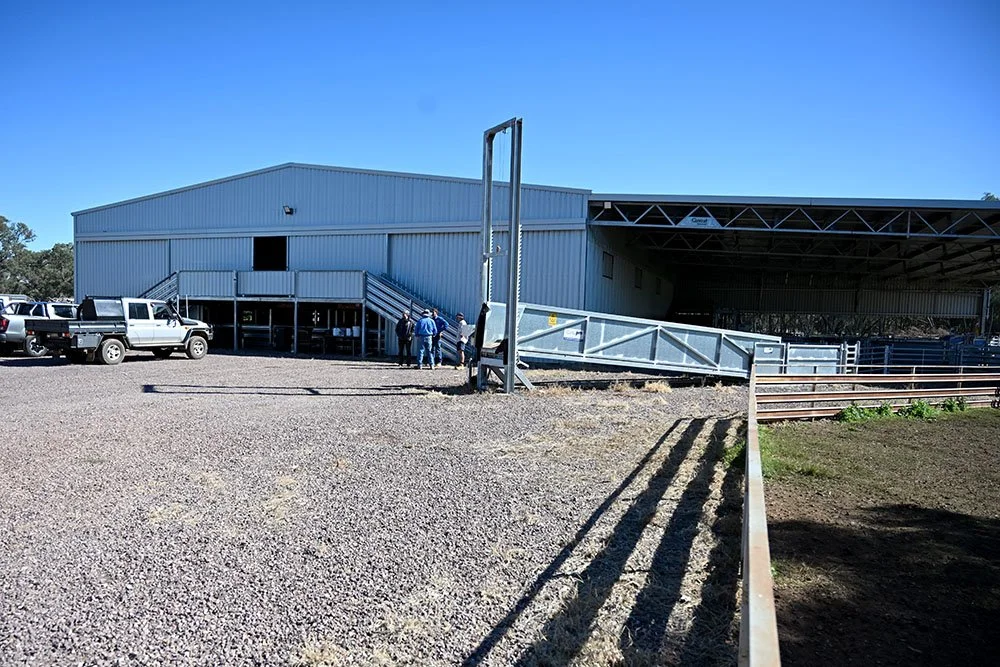
Another significant investment has been in livestock infrastructure. Recently, Rob added a new shearing shed, covered yards and sheep-handling equipment.
He says the investments have improved labour efficiency, animal handling and staff conditions. The upgrades have allowed them to make better use of the work calendar and to book livestock contractors and shearers more easily.
“In the past, sheep came ‘second fiddle’ to our crops, but they’re more profitable now,” Rob says. “We’re glad we made those investments.”
Within the cropping program, change is driven by measurement. Moisture probes on two different soils guide input decisions.
The farm is also zoned using precision agriculture. Frosty country is grazed, while higher country is cropped for longer in the rotation. Inputs such as lime and urea are applied to suit each zone within paddocks.
Rob says precision agriculture is not about reducing input costs but rather about producing the best return on investment.
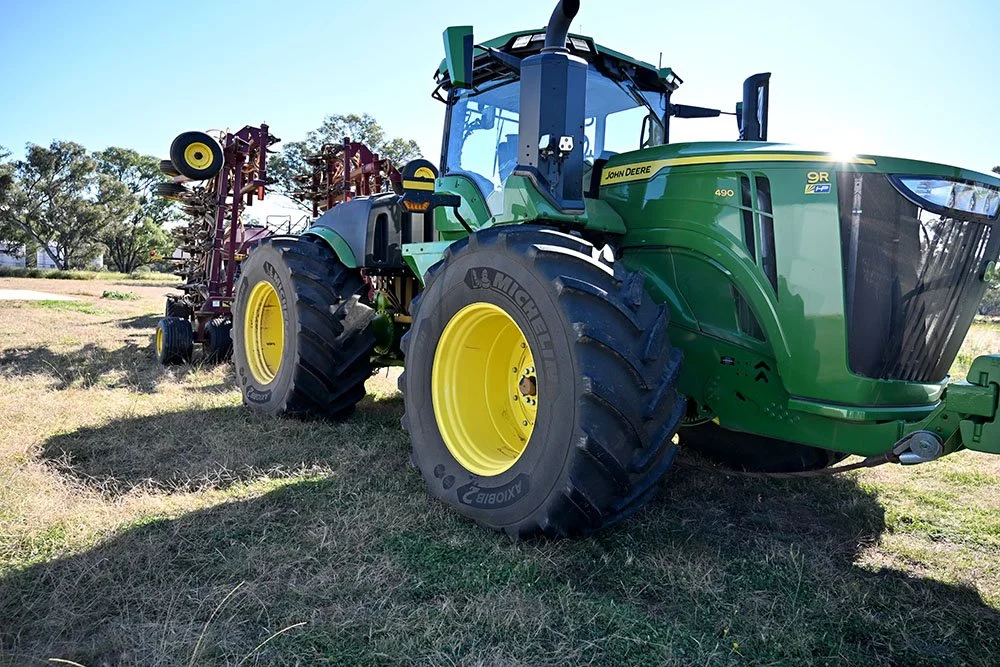
Controlled traffic was another shift that improved timeliness and trafficability while making on-farm trials easier to measure. In one canola paddock, Rob left a strip without a second fungicide application and measured a 600 to 700 kilograms per hectare yield response where the second spray was applied.
Soil acidity is another focus. For many years, Rob targeted a pH (calcium chloride) of 5.5 in the top 10 centimetres. But after testing the soil in 5cm increments to a depth of 20cm, he discovered a pHCa of 4.5, about 15cm from the surface.
Now, he applies up to 4 t/ha of lime and is exploring different tillage methods to incorporate it to a depth of 15cm.
Rob says subsurface acidity needs to be addressed if faba beans and lentils are to become options in the future.
Risk management includes grain, hay and straw reserves for drought and containment feeding. The family has a strong focus on soil protection to maximise water infiltration.
Haymaking is an important fallback after frost and dry spring conditions. Hay is also sold to long-term dairy customers.
For Rob, the next phase is about stepping back and giving his son Fletcher more responsibility on the farm, while he focuses on off-farm investments and travel.
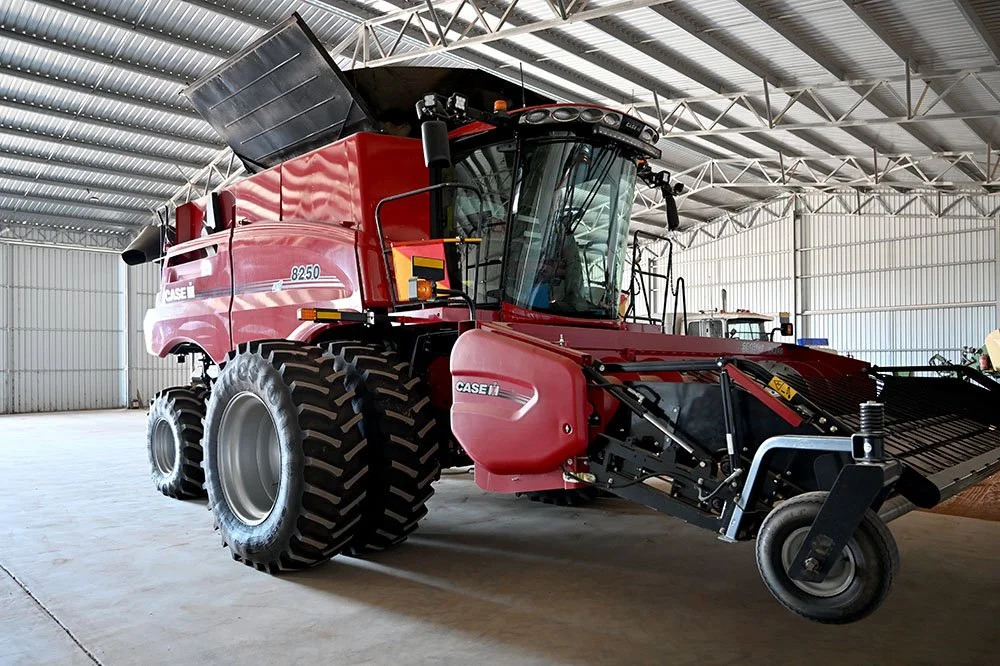
While land and new machinery prices have skyrocketed, making expansion and upgrades difficult, Rob sees a strong future for agriculture.
His advice to younger farmers is: “You must be passionate about agriculture. If you’re not into it, don’t do it.”
For Rob, this passion is matched by a team that is willing to change, measure and adapt well before difficult seasons or input-supply shocks force a change in direction.
FARMLINK MEMBERSHIP
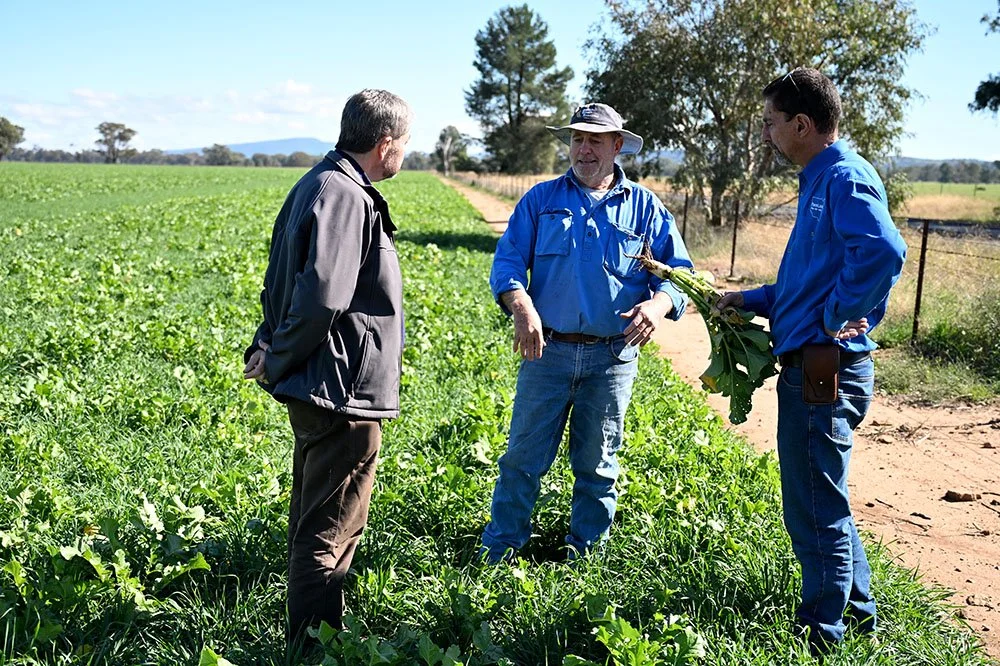
Rob Taylor was one of FarmLink’s founding members in 2003. His key motivation was helping attract more GRDC levies back into locally relevant research and extension activities.
He has hosted FarmLink trials on nitrogen use efficiency, subsoil amelioration, frost and grazing systems. “FarmLink provides valuable networking, research and extension opportunities for growers in our area,” he says.