Member Spotlight - Stephen Hatty
Strip-and-disc system harnessed to capture rainfall

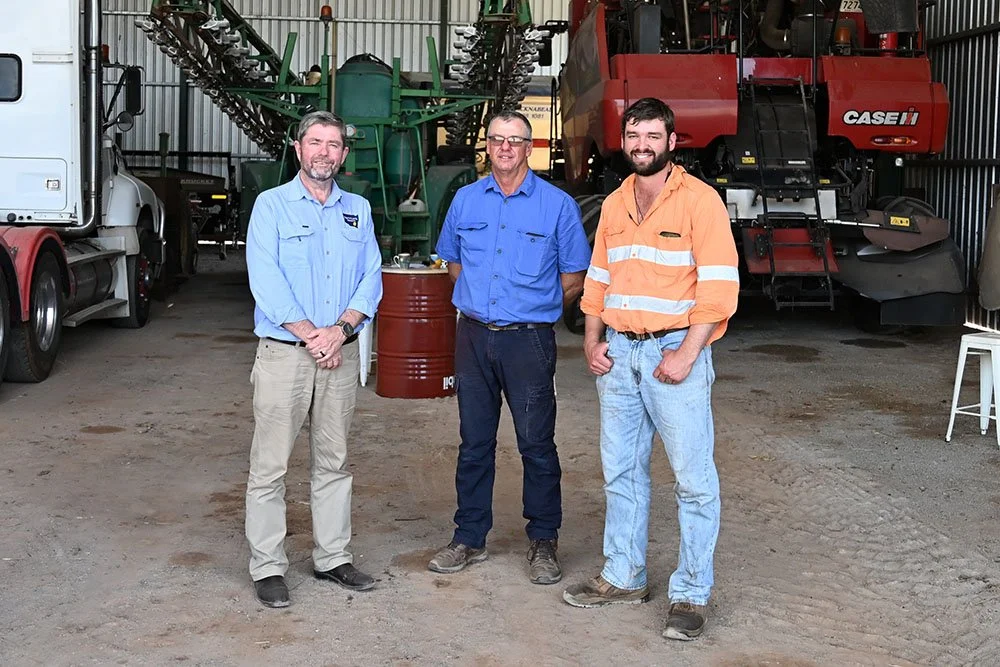
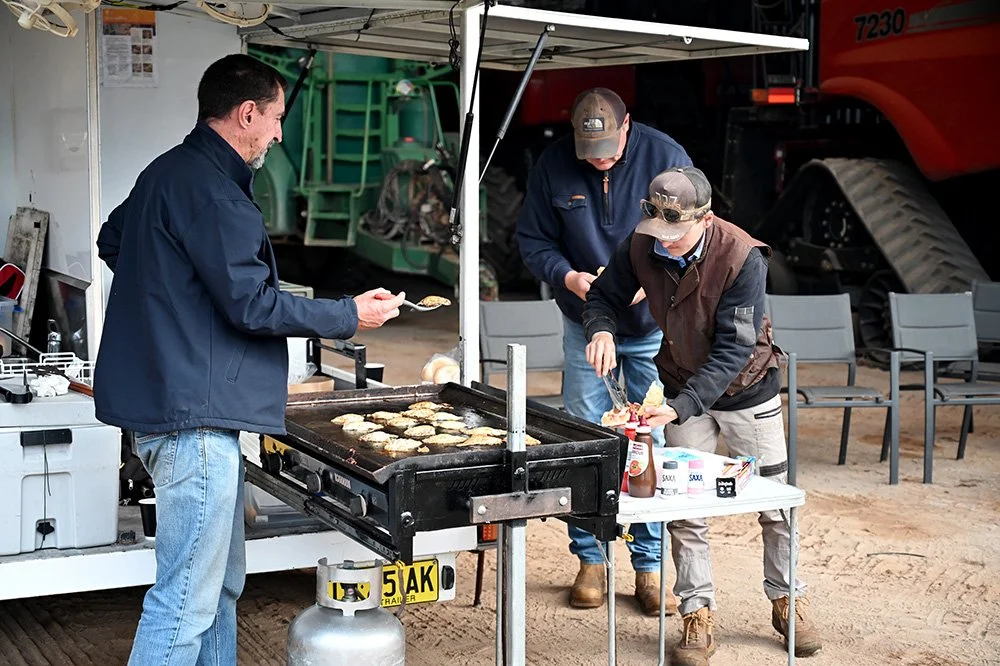
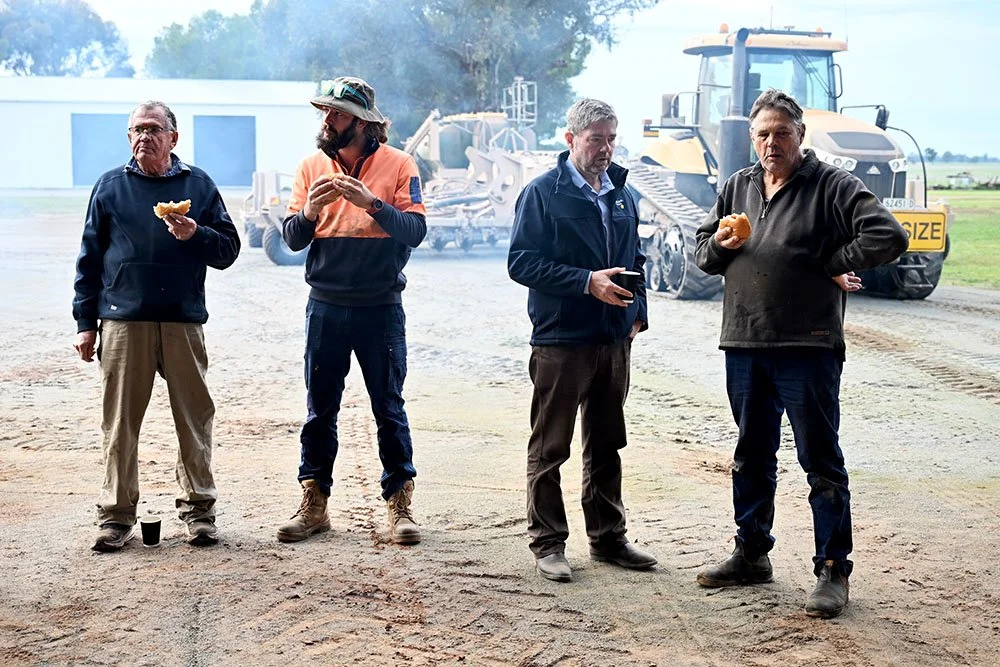
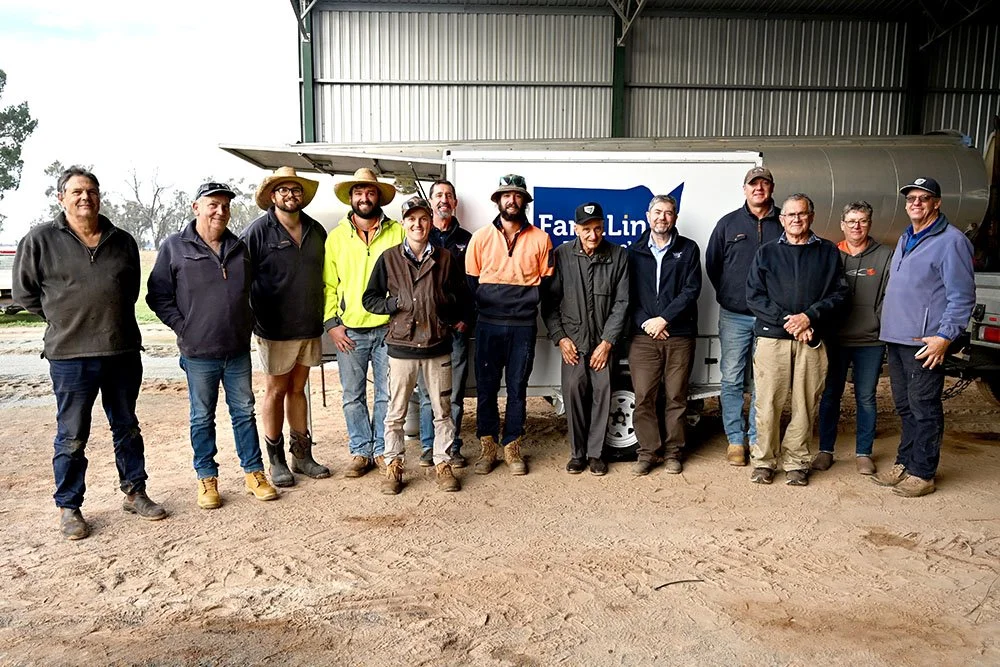
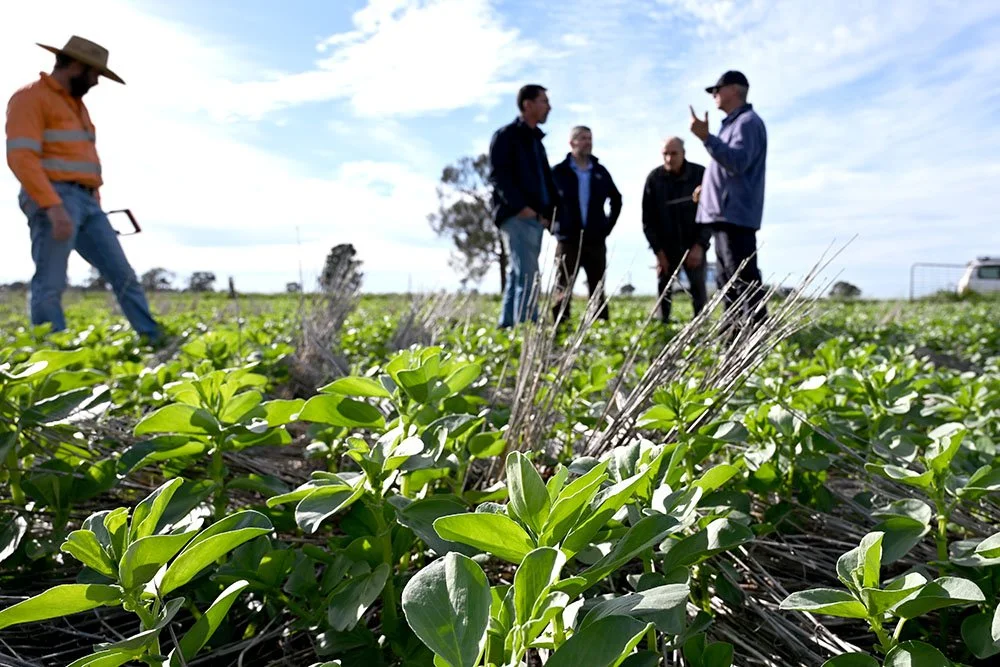
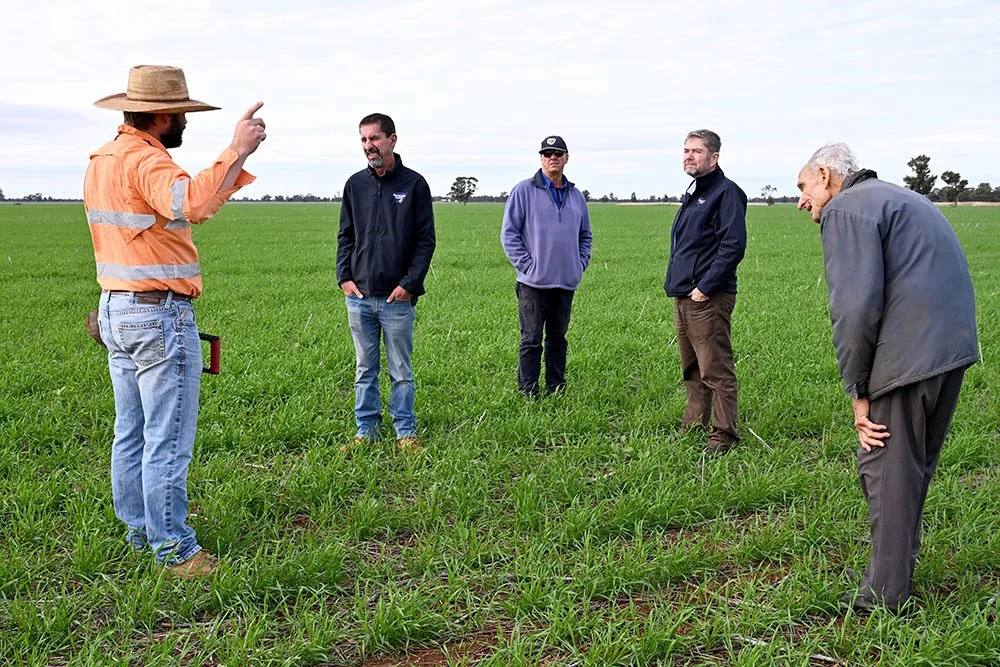
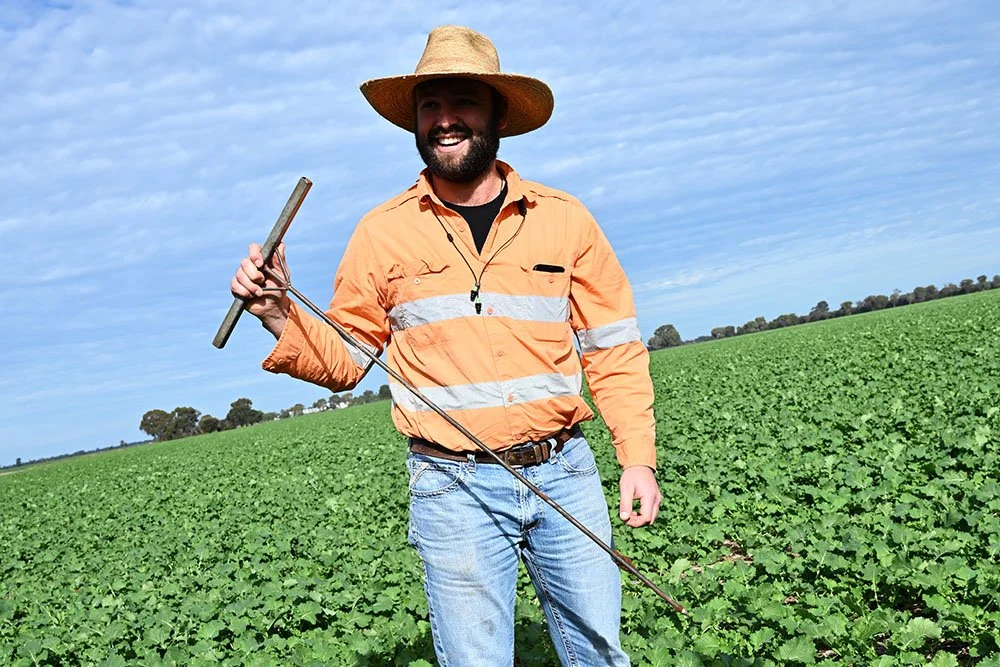
L-R: Shaughn Morgan, Stephen Hatty & Nathan Hatty.
FARM SNAPSHOT
Owners: Stephen, Michelle, Rodney, Joel and Nathan Hatty
Location: Matong, New South Wales
Farm area: 2,855 hectares (owned), 505ha (leased)
Annual rainfall (mean): 450mm
Soil types: red clay loam to black self-mulching clay
Soil pHCa: 4.8 to 7.0
Enterprise: 100% cropping
Typical crop sequence: canola/wheat/barley/pulses (faba bean and field peas)
A strip-and-disc system underpinned by controlled traffic is helping the Hatty family capture moisture, build healthier soils and concentrate weeds on permanent tramlines.
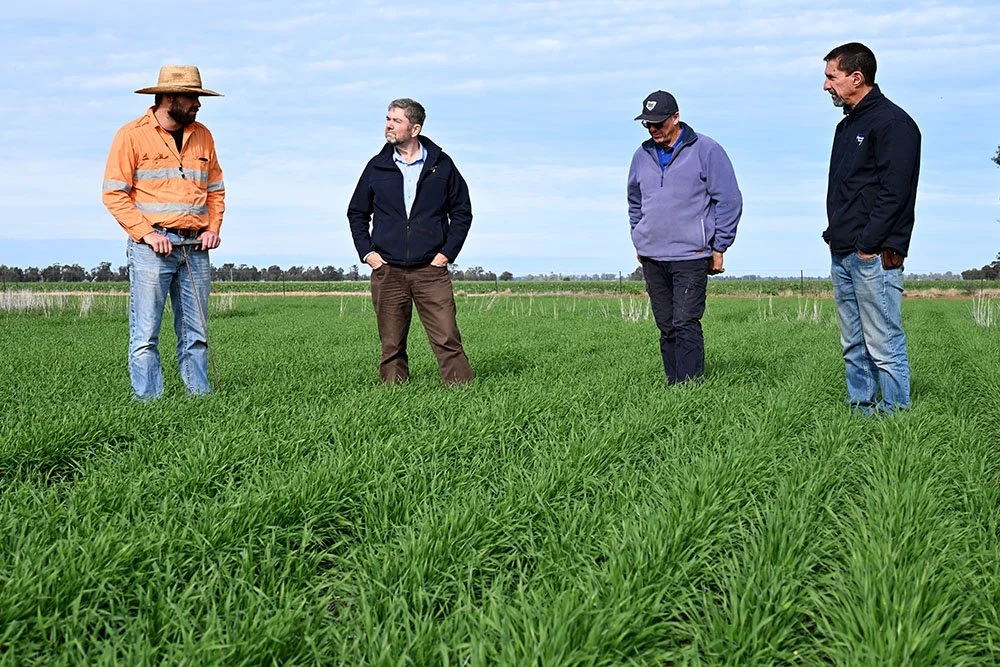
Stephen Hatty and his family are using standing stubble to capture every millimetre of available rainfall on their farm near Matong in southern New South Wales.
The Hatty family farms 2,855 hectares of owned and 505ha of leased country in a 450-millimetre rainfall zone. They have set up the business to capture and retain every drop of rain for reliable crop establishment and profitable grain production.
Diverse rotation
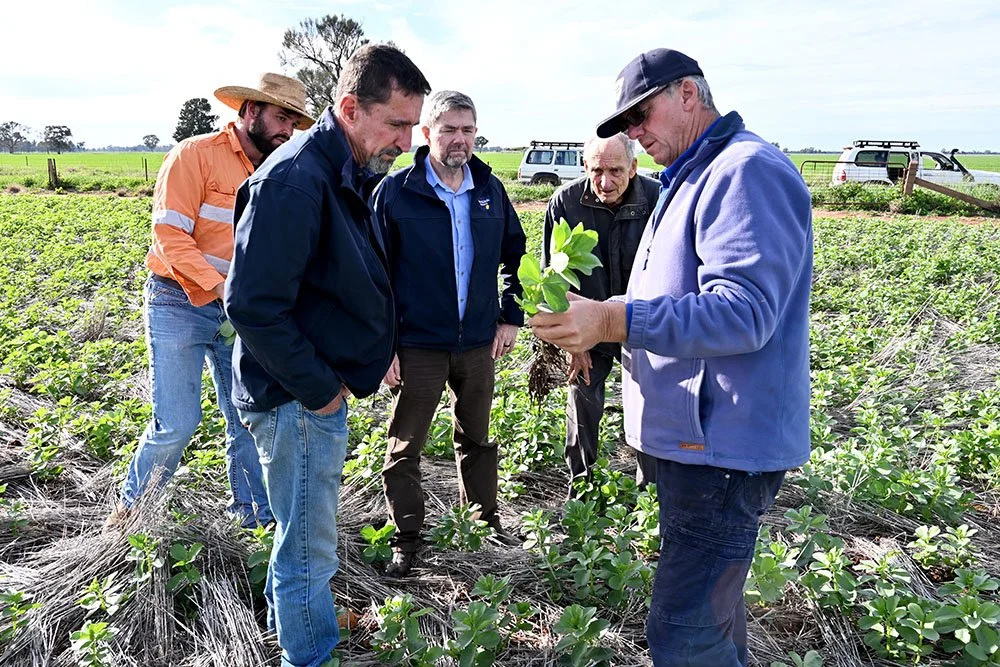
The family’s diverse cropping program comprises a four-year rotation of canola/wheat/barley/pulses. Faba beans comprise three-quarters of the pulse area, with field peas on the remainder.
They embraced the strip-and-disc system in 2017, when they purchased a disc seeder. This enables the Hattys to sow with minimal soil disturbance.
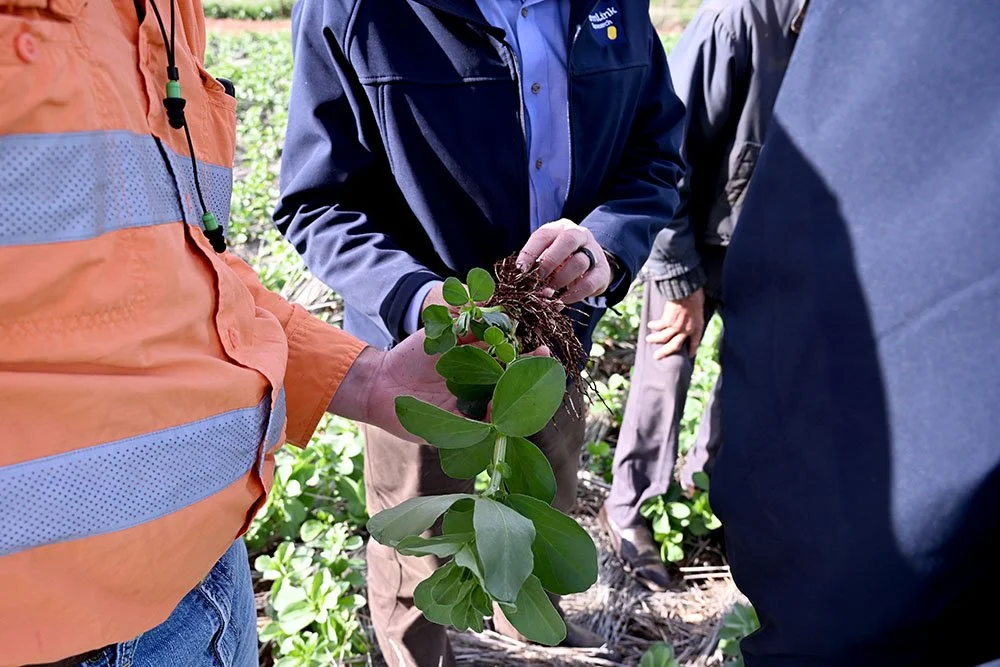
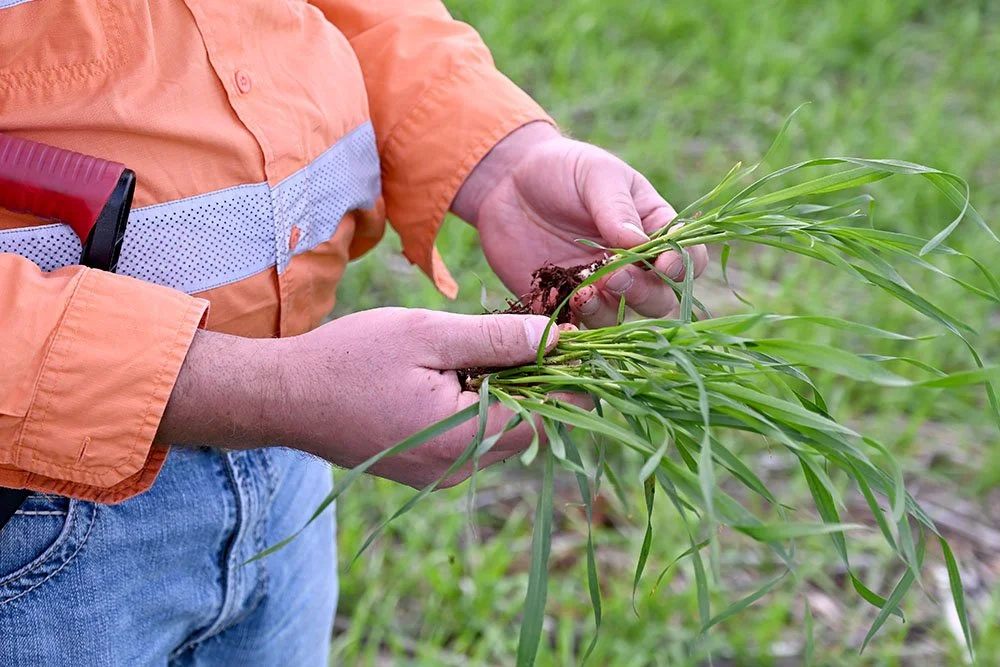
They bought a stripper front two years later to pluck grain directly off the heads, leaving the straw standing upright in the paddock. This retained stubble protects the soil and conserves moisture.
Stubble burning has disappeared from the family’s farming system. The family has not burned paddocks since the 1990s, apart from one paddock burned to manage a severe mouse problem.
Stubble benefits
Stephen says the benefits of retained stubble are apparent both above and below the soil surface.
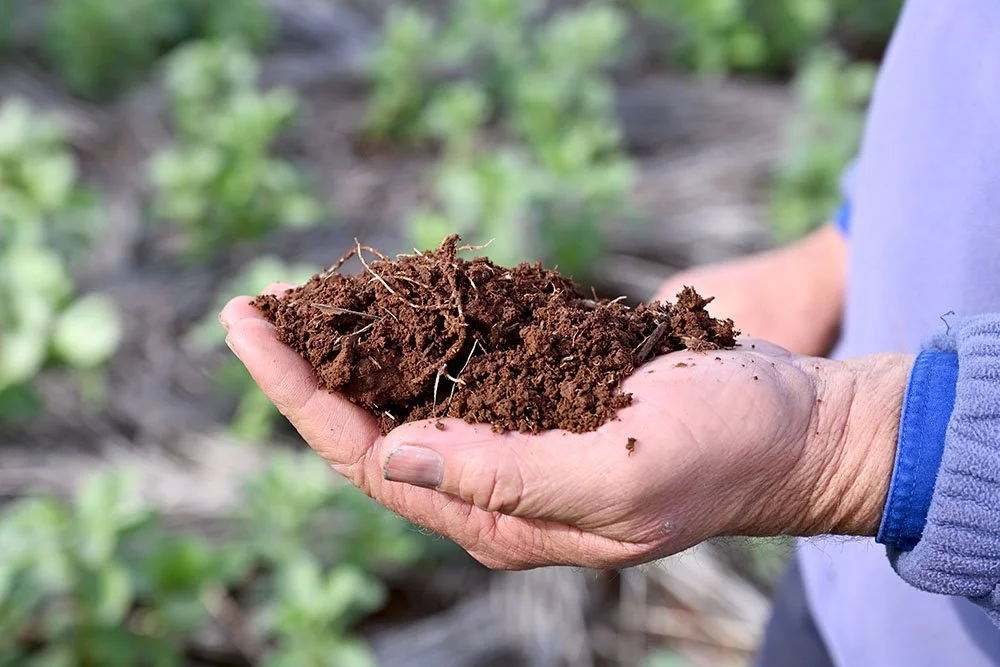
“There’s much more retained moisture and earthworm activity,” he says. “The soil is also now more friable.”
Soil structure has improved since the family removed cultivation and adopted controlled-traffic farming. Stephen believes that controlled-traffic farming has helped the soil hold water and enabled crops to extract nutrients more effectively.
Stored subsoil moisture can make a difference at sowing: “We have seen where we were able to go planting and others couldn’t,” Stephen says.
Nonetheless, he says the topsoil can still dry quickly in a tough season. However, a thick layer of residue appears to protect moisture deeper in the profile.
An agronomist undertaking soil sampling at the Hatty’s farm noticed the change. Stephen says the agronomist repeatedly commented on the soil’s softness as they took soil samples.
Patience required
The family has found that long-term change requires patience. Stephen says stubble retention can initially tie up nitrogen and may affect early crop performance.
“We pushed through though,” he says. “I knew the benefits were there.”
The time needed to see a response differs between paddocks. Stephen says some soils improve within two years, while other areas may take a decade or longer.
Controlled traffic
Controlled traffic supports the family’s moisture-focused system. The Hattys use a 12-metre controlled-traffic layout, with permanent wheel tracks set at 3m intervals.
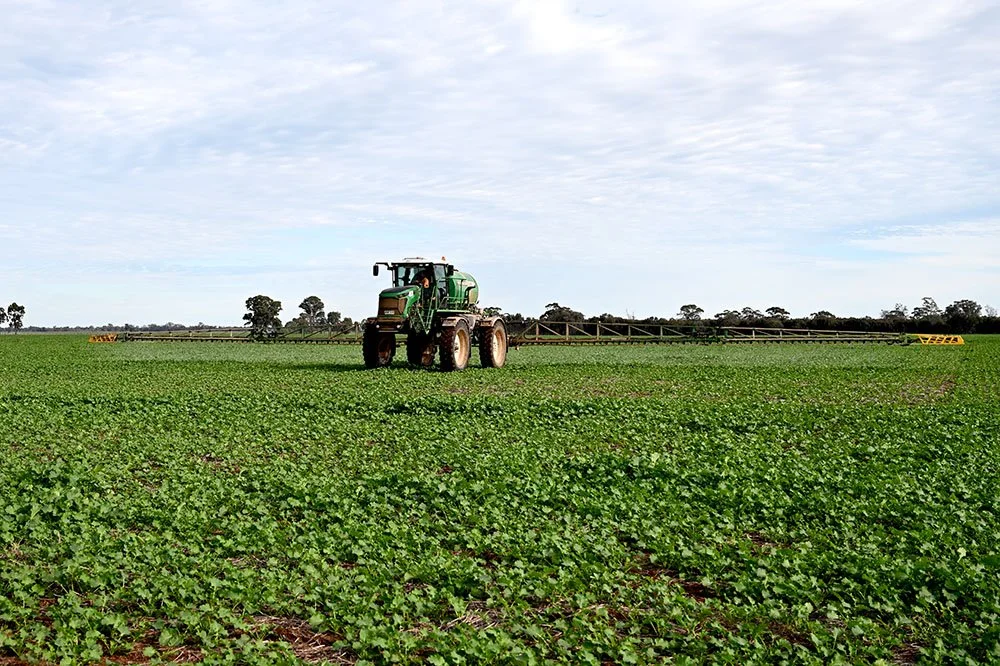
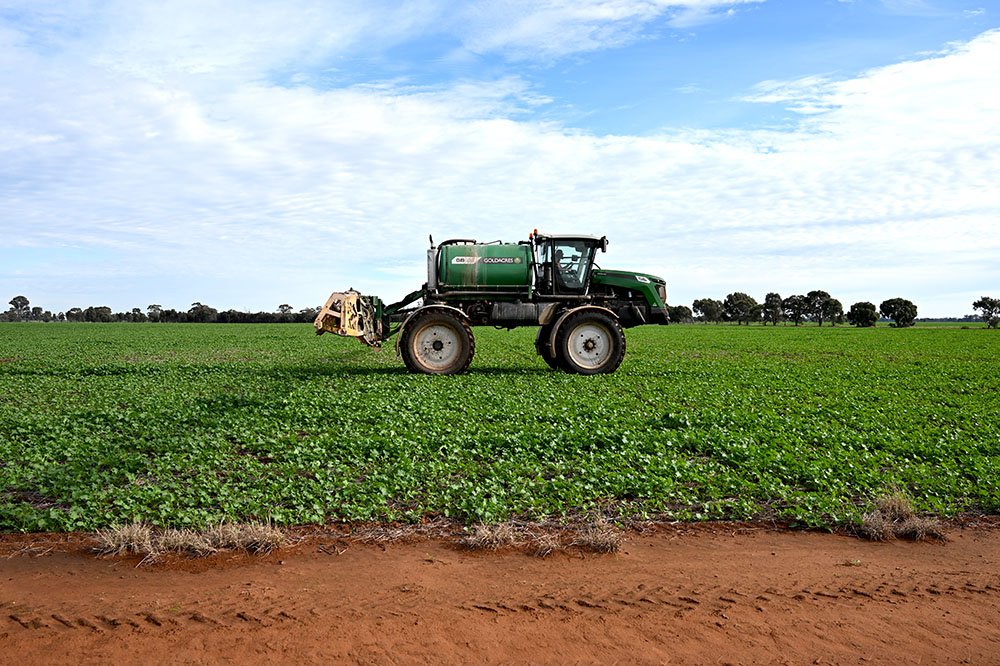
Their boomspray and spreader cover three seeder widths. Matching machinery widths confines compaction to permanent tramlines and leaves most of the paddock free of wheel traffic.
The conversion took four to five years. It followed the purchase of a 12m harvester front. An extension to the seeder bar was next, followed by an upgrade to the boomspray.
Chaff tramlining
Moving to controlled traffic also enabled chaff tramlining. This involves fitting equipment to the rear of their harvester to direct weed seeds and chaff onto the permanent tramlines rather than spreading them across the paddock.
After seeing the practice on a WeedSmart study tour in Western Australia, Stephen adopted it on his family’s farm.
He estimates that leaving seeds on the tramlines delivers an 85 per cent reduction in viable weeds.
The key benefit is containment. Annual ryegrass and other weeds may still be visible on the tramlines, but with wheel traffic over them, they are less likely to invade the crop zone.
Stephen says paddocks are cleaner, particularly where annual ryegrass had been previously difficult to manage.
Crop rotation
A double-break of pulses followed by canola provides two years of grass weed control and helps limit disease carryover before cereals return.
Canola is split evenly between triazine-tolerant and Clearfield® types. Clearfield® varieties offer vigour and seasonal resilience, while triazine-tolerant canola provides a grass weed clean-up option.
The family tries to alternate herbicide-tolerance systems across rotations. The approach reduces repeated pressure on the same chemistry and preserves options for Clearfield® barley.
The family recently joined FarmLink’s Hyper Profitable Cropping Group to assess how efficiently their Matong operation converts limited rainfall into profitable crop production.
With input costs rising, the family’s goal is to retain resources, manage risk and remain profitable.
Stephen’s advice to growers considering change is to seek evidence from local farmers and advisers, and, where possible, trial new ideas on a smaller area.
“You don’t have to go in boots and all,” he says. “Just have a dabble until you’re confident it’s the way to go.”
FarmLink membership
Stephen Hatty was one of FarmLink’s founding members when the group formed in 2003. He says GRDC investment in FarmLink is most valuable when it supports locally relevant, on-farm research. That work gives growers a chance to test ideas on their own soils.
Through FarmLink, Stephen enjoys attending field days, observing research projects and hosting research work on his farm.